A current case in New York
A current case in Saugerties in the US state of New York draws attention to an issue affecting many landfill sites. The town supports an application for state funding to remediate former landfills. According to local reporting, PFAS and 1,4-dioxane were detected near one of the sites in 2021.
Cases like this raise a technical question that applies beyond the individual location: is the downstream municipal wastewater treatment plant designed for the composition and load of the delivered leachate?
Leachate differs from municipal wastewater
Landfill leachate forms when precipitation and other liquids pass through the landfill body. Its composition depends on the deposited material, the age of the landfill and the local water balance. Feed quality can therefore fluctuate considerably.
Typical challenges include high salinity, refractory organic compounds, nitrogen compounds and metals. If PFAS are also detected, the entire material flow needs to be assessed. Transferring the water to another treatment plant does not by itself demonstrate adequate removal of the substances concerned.
Municipal wastewater treatment plants are primarily designed for municipal sewage. Co-treatment of special industrial or landfill-specific streams therefore requires a technical assessment. Relevant factors include the actual contaminant load, possible effects on biological treatment, discharge requirements and the fate of substances in sludge or other residual streams.
On-site treatment with reverse osmosis
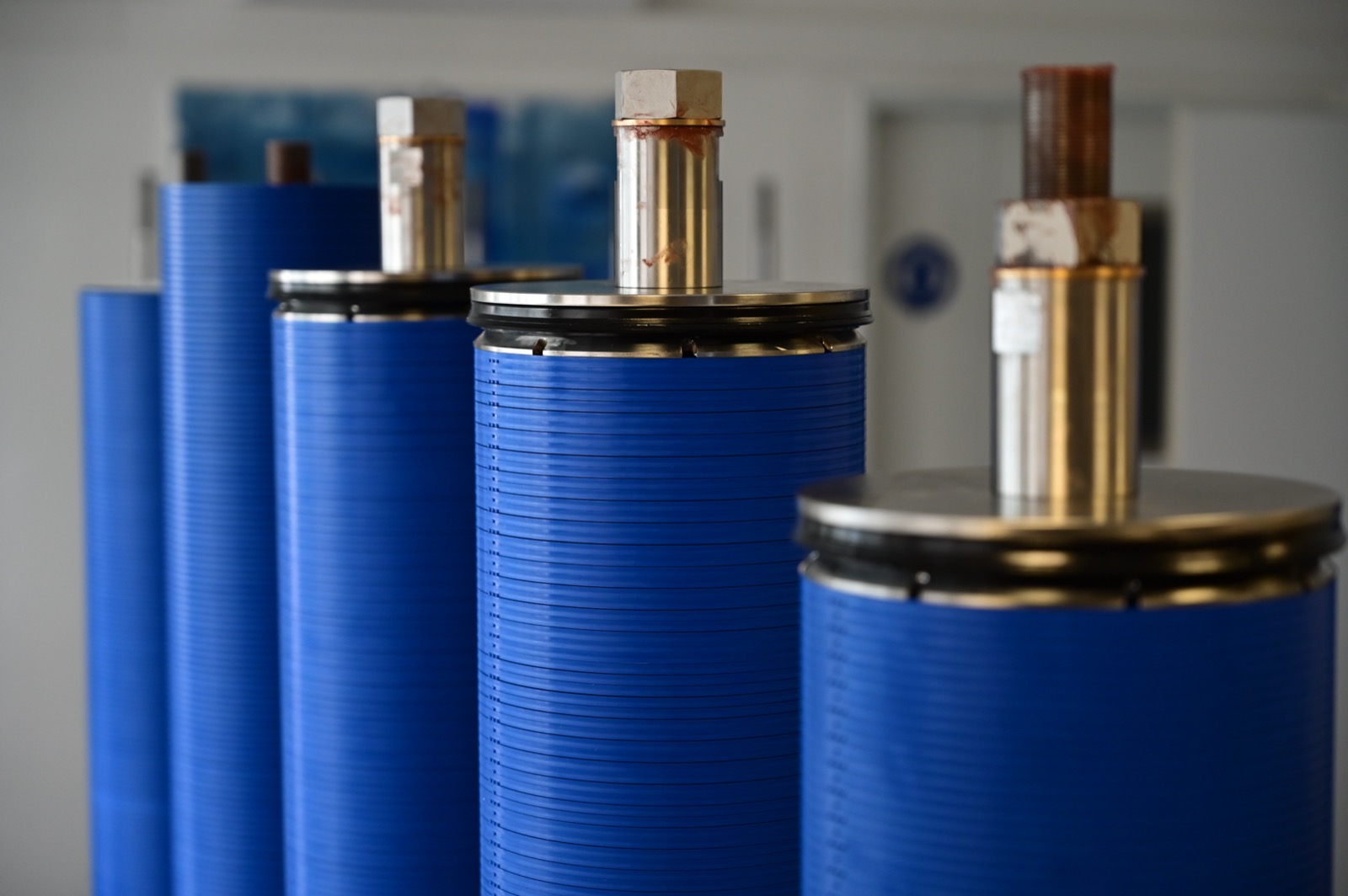
Treatment directly at the landfill makes it possible to collect the contaminated stream separately and treat it for a defined objective. Reverse osmosis can retain dissolved salts and many organic compounds. RCDT disc-tube modules are particularly suitable for demanding waters because their construction is designed for high loads and effective cleaning.
The membrane plant is only one part of the overall system. Stable operation requires pretreatment, operating pressure, recovery, cleaning and monitoring to be matched to the actual feed. Regular analyses confirm whether the required permeate quality is maintained when the composition changes.
PFAS retention requires concentrate management
A clear distinction is important for PFAS. Reverse osmosis does not destroy these substances. It separates part of the substances in the feed from the treated water and concentrates them in the concentrate. The required retention depends on the individual PFAS compounds, membrane and operating conditions and must be verified analytically.
A treatment concept is complete only when concentrate management has also been defined. Depending on the site, additional treatment, external disposal or a combination of processes may be required. The suitable route depends on concentration, flow rate, permits and the available disposal options.
Treatment as a documented overall system
An on-site solution creates clear responsibilities and measurable material flows. Operators can monitor feed, permeate and concentrate separately and adapt plant operation to actual changes.
ROTREAT designs and supplies modular reverse osmosis plants with RCDT technology for demanding landfill leachate. Every design starts with reliable water analyses, the required flow rate, the target permeate quality and a viable concept for the residual streams.
A technical assessment of landfill leachate starts with the available analyses and operating data. This information provides the basis for evaluating which process combination is suitable for the site.
Source
Daily Freeman: Saugerties Town Board backs Riverkeeper’s bid for landfill remediation funds